
Wrong failure mode
The selected sensor cannot see the actual degradation mechanism.
Predictive maintenance is useful only when a condition signal becomes a practical inspection, repair or shutdown decision. We support Bangladesh plants in defining the problem, finding a qualified technology route and coordinating a controlled pilot.
For power generation, grid and substation, refinery, oil and gas, water, process industry, maritime and port assets.
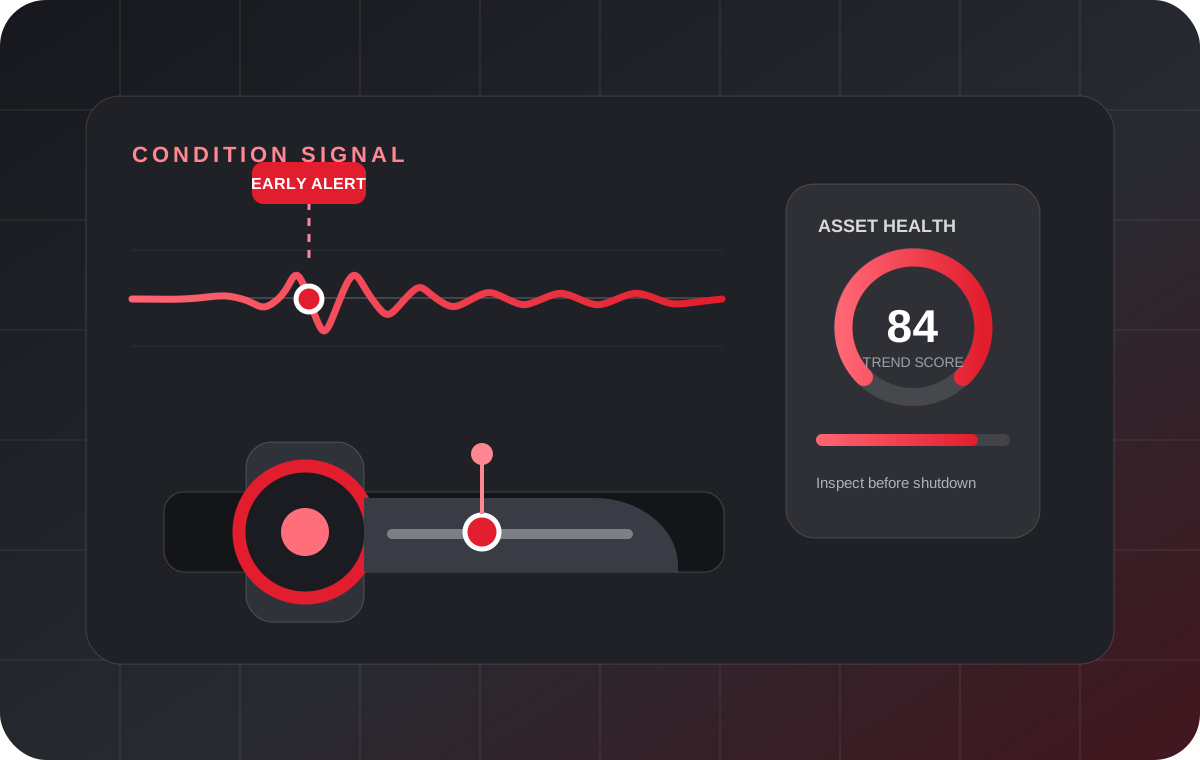
A plant can buy sensors and still miss the failure. The monitoring method, baseline, alarm logic, diagnostic competence and maintenance response must work together.
If the system cannot show what changed, how serious it is and what action is required, it may produce data without reducing operational risk.
The selected sensor cannot see the actual degradation mechanism.
Normal load and process changes are mistaken for equipment faults.
Warnings reach a screen but not the maintenance planning route.
The plant cannot prove avoided damage, reduced outage or maintenance value.
One sensor does not cover every asset. A credible programme combines the correct measurement, asset context and engineering response.
For imbalance, misalignment, looseness, bearing damage, gear defects, resonance and other rotating machinery conditions.
For abnormal heating in electrical connections, bearings, refractory systems, mechanical friction and process equipment.
For contamination, lubricant degradation and abnormal wear particles that may identify internal component damage.
For compressed air and steam leaks, valve passing, early bearing friction, electrical discharge and trap performance.
Motor current, partial discharge, transformer dissolved gas and other electrical indicators for insulation and winding risk.
Use historian, control and condition data to identify deviation where load, environment and operating mode influence asset behaviour.
The page is not limited to one power plant machine. It follows the industrial focus shown in the existing website footer.
| Sector | Priority assets | Condition routes |
|---|---|---|
| Power plant | Gas and steam turbines, generators, pumps, fans, compressors, bearings | Vibration, oil, thermography, ultrasound, electrical and process analytics |
| Grid and substation | Power transformers, GIS and AIS, breakers, cables, batteries and UPS | DGA, partial discharge, thermal, breaker timing, insulation and battery health |
| Oil, gas and pipeline | Compressors, pumps, MOV and ESD valves, tanks, terminals and pipelines | Dynamic signal, valve signature, leak, corrosion and process deviation monitoring |
| Water and process plants | Pumps, blowers, motors, gearboxes, chemical dosing and actuated valves | Vibration, current, ultrasound, thermal and operating performance trends |
| Refinery and heavy industry | Rotating trains, furnaces, heat exchangers, fans, conveyors and critical drives | Condition sensors, thermography, oil, acoustic and multivariable analytics |
| Maritime and port | Propulsion support equipment, cranes, pumps, winches and cargo systems | Vibration, thermal, lubricant, electrical and structural condition routes |
A limited, measurable pilot is stronger than an immediate plant-wide promise.
Confirm criticality, known failure history, failure mechanisms, present maintenance method and available operating data.
Compare measurement method, sensor installation, environment, data path, diagnostics and provider references.
Define assets, duration, normal operating states, alarm governance, response responsibility and success criteria.
Connect warnings to inspection or work order, document findings and calculate avoided risk or maintenance value.
These references support programme design. They do not replace asset-specific engineering judgment.
This video card is ready for a short technical explainer showing a real industrial failure signal, diagnostic reasoning and maintenance action. It keeps the page useful today without publishing a false case study or invented performance claim.
Open Impro Solutions YouTubeClear answers before selecting a monitoring system or technical provider.
It uses measured condition and operating data to identify developing degradation before functional failure. The output should support a planned inspection or maintenance decision.
No. Fixed alarms, trending, engineering rules, diagnostic models and machine learning can all be useful. The correct method depends on the asset, failure mode, data quality and maintenance action.
No. Vibration, temperature, lubricant, ultrasound, electrical condition, partial discharge and process data reveal different mechanisms. Sensor selection must follow the failure-mode review.
Start with high-consequence assets where failure history, repair lead time, spare availability or production loss justifies the monitoring effort.
It should prove that the technology detects meaningful deviation, the plant can interpret it, an action route exists and the result creates measurable risk or maintenance value.
We can support requirement clarification, qualified provider and OEM communication, document review, import and local coordination, pilot planning and commercial follow-up. Specialist diagnostics remain with the appointed qualified technical party.
We can review the problem statement, identify missing technical information and discuss the correct technology and coordination route for Bangladesh.